
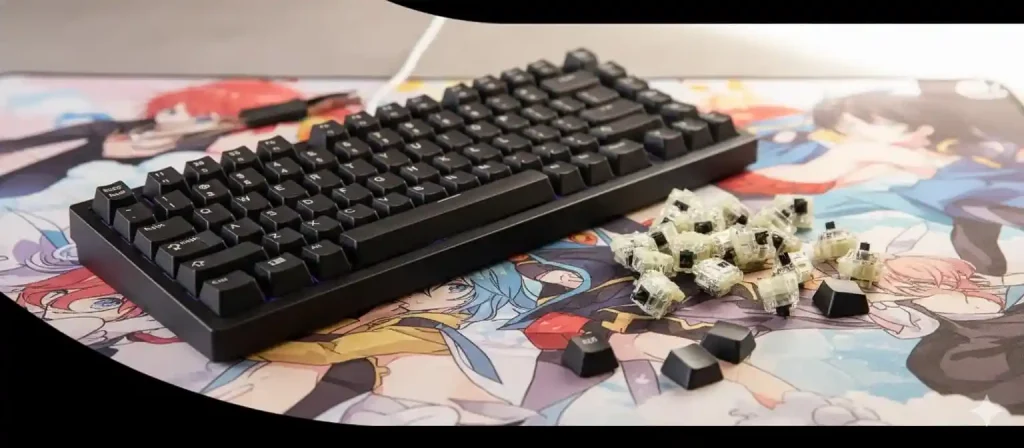
Cherry Black switches sit in a peculiar, almost austere corner of the mechanical keyboard world. They are not flashy, they are not forgiving, and they do not try to charm you on first press. Yet for decades, they have persisted, quietly favored by a subset of users who value control, resistance, and predictability over softness or speed. If you have ever wondered why some typists and gamers swear by them while others abandon them within minutes, this guide exists to resolve that tension.
This article explores Cherry Black switches in depth, from their physical characteristics to their sound, gaming performance, durability, and ideal use cases. By the end, you should have a clear sense of whether these heavy linear switches belong under your fingers or whether they are better admired from a distance.
What Are Cherry Black Switches?
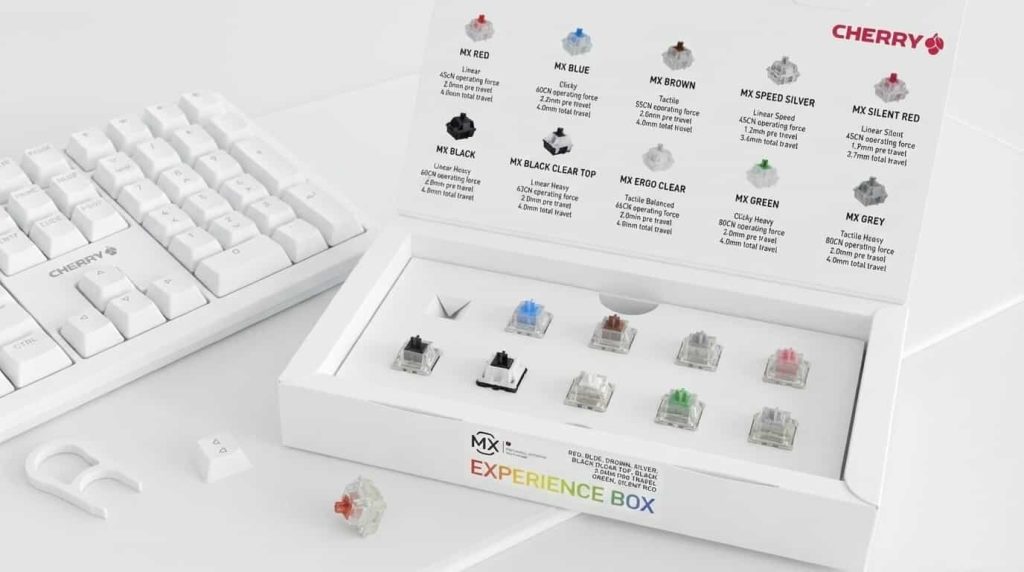
Cherry Black switches are linear mechanical keyboard switches manufactured by Cherry GmbH, the German company that defined much of the modern switch standard still used today. Linear means the switch moves straight down with no tactile bump and no click. From top to bottom, the motion is smooth and uninterrupted, distinguished primarily by resistance rather than feedback.
What sets Cherry Black switches apart is their relatively high actuation force. Compared to Cherry Reds, which are light and effortless, Cherry Blacks require deliberate pressure. Historically, they were among Cherry’s earliest linear switches and were commonly found in older industrial keyboards and early gaming boards.
Internally, Cherry Black switches use a black stem, a stiff spring, gold crosspoint contacts, and the classic Cherry MX housing design. They are rated for tens of millions of keystrokes and conform to the standard MX mount, making them compatible with most modern keycap sets.
In practice, Cherry Black switches are unapologetically firm. They do not cushion mistakes, they do not invite casual tapping, and they do not try to imitate the feel of typewriters or laptop keyboards. They exist to translate intentional force into clean input, nothing more and nothing less.
For official specifications and historical background, Cherry’s own documentation remains the most authoritative reference.
How Cherry Black Switches Feel Compared to Other Cherry Switches
The defining sensation of Cherry Black switches is resistance. From the moment you press the key, the spring pushes back with noticeable strength. There is no tactile event to announce actuation, so the experience depends entirely on muscle memory and pressure control.
Compared to Cherry Red switches, Cherry Blacks feel substantially heavier. Reds encourage rapid, repeated presses with minimal fatigue, while Blacks demand a more grounded typing style. Cherry Browns, which introduce a tactile bump, feel communicative by comparison, whereas Blacks feel stoic and uninformative. Cherry Blues announce themselves loudly and sharply; Blacks remain silent and restrained.
This difference in feel often leads to polarized reactions. Some users describe Cherry Black switches as “solid” or “anchored,” appreciating the sense that each keypress is intentional. Others describe them as “tiring” or “stiff,” especially during long sessions without breaks.
An interesting side effect of their weight is reduced accidental keypresses. On lighter switches, resting fingers can trigger unintended inputs. Cherry Black switches resist this, making them appealing to users who rest their hands heavily on the keyboard.
In high-end custom keyboards, including builds inspired by brands like owlab ti he, Cherry Blacks are sometimes chosen specifically to counteract overly soft plates or flexible mounts. The switch’s firmness restores balance to otherwise bouncy configurations.
Cherry Black Switches Sound Profile Explained
Cherry Black switches are not silent, but their sound is understated. Because they are linear and non-clicky, the sound comes primarily from two sources: the keycap bottoming out against the switch housing and the upstroke as the spring returns the stem to its resting position.
On a rigid plate with thin keycaps, Cherry Black switches produce a low-pitched, solid “thock” rather than a sharp clack. On softer mounting styles, such as gasket mounts, the sound becomes more muted and rounded. The heavier spring can slightly dampen resonance compared to lighter linears.
Lubrication plays a significant role here. Factory Cherry Black switches can sound scratchy, especially in older stock. Proper lubrication reduces friction and smooths the sound dramatically, often transforming the switch from dry and hollow to dense and controlled.
Case material, plate material, and keycap thickness matter more than the switch itself when it comes to sound. Still, Cherry Black switches tend to avoid high-frequency noise, making them suitable for shared environments where loud clicks would be unwelcome.
Actuation Force and Travel Distance of Cherry Black Switches
Cherry Black switches actuate at approximately 60 grams of force, with a bottom-out force closer to 80 grams. The total travel distance is around 4.0 mm, with actuation occurring roughly halfway through the press.
These numbers matter more than they might seem. The higher actuation force means that each keypress requires commitment. Rapid tapping without bottoming out is possible, but it demands practiced finger control. For users accustomed to lighter switches, this can initially feel exhausting.
The full travel distance contributes to the sense of stability. Short-travel switches can feel twitchy, whereas Cherry Blacks encourage full, deliberate presses. This makes them less prone to input errors caused by partial presses or grazing touches.
From an ergonomic perspective, the heavier force can either reduce or increase strain depending on the user. For those with strong typing habits and proper posture, Cherry Black switches can feel supportive. For others, especially those transitioning from laptop keyboards, fatigue may appear quickly.
Cherry Black Switches for Gaming: Pros and Cons
In gaming, Cherry Black switches occupy a niche rather than a mainstream position. Their linear nature makes them predictable, which is valuable in competitive environments where consistency matters. However, their weight introduces trade-offs.
On the positive side, Cherry Black switches reduce accidental inputs. In games where precision matters, such as tactical shooters or strategy titles, this can be an advantage. Holding keys for movement feels stable, and deliberate presses reduce misfires.
The downside emerges in games requiring rapid, repeated inputs. Fast-paced action games, rhythm games, or titles that rely on constant strafing can feel more demanding on heavier switches. Over long sessions, finger fatigue may set in sooner than with lighter alternatives.
Historically, Cherry Black switches were favored in early esports keyboards before lighter linears became popular. Some professional players still prefer them, citing better control under pressure. Others have moved on to lighter or shorter-travel switches for speed.
Choosing Cherry Black switches for gaming is less about raw performance and more about playstyle. If you value control over speed, they can be a solid choice. If you chase minimal effort and maximum responsiveness, they may feel like an obstacle.
Linear Switch Comparison: Cherry Black vs Cherry Red vs Cherry Speed
Comparing Cherry Black switches to other Cherry linears clarifies their role. Cherry Reds are light, forgiving, and widely recommended as a default option. Cherry Speed switches are even lighter and actuate earlier, designed for rapid inputs with minimal travel. Cherry Black switches sit at the opposite end of this spectrum. They require the most force, have standard travel, and offer no early actuation advantages. This makes them slower in theory but more controlled in practice.
Cherry Reds excel in accessibility and comfort. Cherry Speeds caters to competitive gaming and users who want an instant response. Cherry Blacks appeal to users who want resistance, stability, and reduced error rates. None of these switches is objectively better. They reflect different philosophies of interaction. Cherry Black switches treat each keypress as a decision rather than a reflex.
Are Cherry Black Switches Good for Beginners?
For most beginners, Cherry Black switches are not ideal. The higher actuation force can feel discouraging, especially for users transitioning from membrane or laptop keyboards. Early fatigue and perceived stiffness often overshadow their benefits.
That said, beginners with specific preferences may still enjoy them. Users who type heavily, rest their fingers firmly, or dislike accidental presses might appreciate the resistance. Learning on Cherry Black switches can also encourage disciplined typing habits.
The risk lies in misattribution. New users may blame themselves for discomfort when the issue is simply a switch choice. Starting with lighter switches allows exploration without unnecessary strain.
Cherry Black switches reward experience more than curiosity. They tend to shine once users understand what they want from a keyboard rather than when they are still discovering it.
Durability, Lifespan, and Build Quality of Cherry Black Switches
Cherry Black switches are built to last. Rated for approximately 50 million keystrokes, they use gold-plated crosspoint contacts designed to resist corrosion and wear. Their internal design has remained largely unchanged for decades, a testament to its reliability. The heavier spring may even contribute to longevity by reducing chatter and inconsistent actuation over time. In industrial and office environments, Cherry Black switches have proven capable of surviving years of continuous use.
Quality consistency is another strength. Cherry’s manufacturing standards ensure predictable performance across batches, something not always guaranteed with newer or boutique switch manufacturers. Even in modern custom builds, Cherry Black switches are valued for their dependable tolerances. They may lack novelty, but they rarely fail. In a world full of experimental designs, they resemble inquisitorial agents of input, enforcing order through resistance rather than persuasion.
Customization and Keycap Compatibility
Cherry Black switches are highly versatile when it comes to keycap customization. They use the standard MX stem, which means most aftermarket keycaps—including artisan sets, PBT doubleshot, and clear keycaps—fit without modification. Clear keycaps, in particular, can enhance backlighting effects, making the keyboard look more vibrant while retaining the firm, linear feel of the Black switches.
Enthusiasts often pair Cherry Blacks with thicker or textured keycaps to improve the typing feel and reduce sound resonance. The combination of heavy springs and quality keycaps creates a solid, premium sensation with each press. Whether you prefer a minimalist aesthetic or a fully customized, RGB-lit setup, Cherry Black switches accommodate a wide range of personalization options without sacrificing performance. Additionally, because the switches are durable and consistent, swapping keycaps repeatedly does not affect the switch’s lifespan. This makes Cherry Blacks a favorite choice for custom builds and hobbyist setups, such as boards inspired by owlab ti he, where both aesthetics and performance are considered equally important.
Comparisons with Other High-Performance Linear Switches
While Cherry Black switches are a staple, they are often compared with newer high-performance linears, such as HMX switches or the beast x 8k series. HMX switches tend to have a slightly lighter actuation force and a smoother travel curve, making them appealing for users who want speed without losing linearity. The beast x 8k switches, on the other hand, push durability and actuation optimization even further, targeting extreme gaming scenarios.
Despite these modern alternatives, Cherry Black switches maintain a strong following due to their reliability, predictability, and long-proven build quality. Many enthusiasts find that while newer switches offer novelty, they often lack the consistent feel and sound that Cherry Blacks deliver over millions of keystrokes. For users looking for a dependable, no-nonsense linear experience, Cherry Blacks remain a reference standard that balances force, travel, and longevity. These comparisons highlight the fact that switch preference is highly personal. Whether you prioritize extreme speed, customizability, or a classic linear feel, understanding how Cherry Blacks stack up against HMX switches or the beast x 8k line helps users make informed choices for their next keyboard build.
Who Should Buy Cherry Black Switches?
Cherry Black switches are best suited for users who value control, intentionality, and durability over lightness and speed. They appeal to typists who prefer firm resistance, gamers who prioritize precision, and builders seeking to balance soft keyboard constructions. They are not for everyone. Casual users, beginners, and those sensitive to finger fatigue may find them unforgiving. Yet for the right user, Cherry Black switches offer a uniquely grounded experience that lighter switches cannot replicate.
Choosing them is less about following trends and more about understanding one’s own interaction style. If you enjoy keyboards that push back, demand attention, and reward deliberate input, Cherry Black switches may feel less like hardware and more like an extension of intent. In a market obsessed with novelty, Cherry Black switches remain quietly defiant, unchanged, unapologetic, and enduring.
Conclusion: Why Cherry Black Switches Still Matter
Cherry Black switches occupy a unique position in the mechanical keyboard ecosystem. In a market increasingly dominated by lighter, faster, and clickier options, their enduring appeal might seem paradoxical at first glance. They do not seek attention with flashy sound profiles, rapid actuation, or novelty stem designs. Instead, they thrive on consistency, durability, and deliberate resistance. For those willing to invest in understanding their nature, Cherry Black switches offer a typing and gaming experience that is surprisingly nuanced, disciplined, and satisfying.
The hallmark of Cherry Black switches is their linear, high-resistance design. From the moment a finger contacts the keycap, the user experiences a smooth, unbroken downward motion, free from tactile bumps or audible clicks. This simplicity is deceptive; it conceals a refined engineering approach where force curves, stem alignment, and spring tension converge to deliver a predictable and controlled input. For typists, this ensures fewer accidental presses, reducing errors caused by grazing touches or unintended key activation. For gamers, it provides a stable platform where each movement, actuation, and hold feels precise, making them particularly suitable for games requiring consistent keypresses, like tactical shooters, real-time strategy, and simulation titles.
Cherry Black switches’ linear nature and substantial actuation force set them apart from lighter counterparts such as Cherry Reds or Speed variants. While those switches emphasize rapid, effortless keypresses, Cherry Blacks prioritize control and intentionality. The experience is closer to an analog interaction than a purely mechanical one; the resistance forces the user to consciously engage each keypress, creating a deliberate rhythm in typing and gaming. Many enthusiasts find this grounded sensation deeply satisfying, especially when combined with high-quality keycaps, proper lubrication, and a well-mounted keyboard plate. Even in fully customized builds, including those inspired by owlab ti he, the switches’ predictability allows enthusiasts to experiment with aesthetics and functionality without compromising reliability.
Sound and acoustic behavior are another aspect where Cherry Blacks excel subtly. While they are not loud or clicky, the switches produce a satisfying low-pitched “thock” when bottoming out, particularly on rigid mounts with heavier keycaps. Lubing further enhances this auditory feedback, smoothing friction and reducing scratchiness. Unlike clicky switches that dominate conversation spaces or disrupt focus, Cherry Blacks maintain a measured presence—audible enough to satisfy enthusiasts but muted enough to respect shared environments. This makes them particularly appealing for home offices, co-working spaces, and gaming setups where acoustic discretion is valued.
Durability remains one of the strongest selling points. Rated for approximately 50 million keystrokes, Cherry Black switches are engineered to last, with gold-plated crosspoint contacts that resist corrosion and maintain consistent actuation over time. Unlike some newer or boutique switches, where experimental designs can compromise longevity, Cherry Blacks remain predictable even after years of heavy use. This reliability extends to maintenance and customization as well. Whether swapping keycaps, modding springs, or lubing stems, the switches tolerate repeated interaction without noticeable degradation, which is why they are a staple in both enthusiast circles and industrial keyboards.
It is important to acknowledge that Cherry Black switches are not universally ideal. Beginners or casual users may initially struggle with the higher actuation force, experiencing fatigue or frustration. Rapid typists transitioning from lighter switches might find them sluggish until muscle memory adjusts. In gaming contexts requiring extreme speed, lighter switches like Cherry Reds or Speed variants may offer advantages in rapid-fire scenarios. Nonetheless, for users who prioritize control, precision, and a grounded feel, Cherry Blacks outperform many alternatives in terms of consistency and reliability. They reward patience and experience rather than immediate gratification, making them a choice for the thoughtful keyboard user rather than the trend-chaser.
Cherry Black switches also highlight the philosophy of interaction in mechanical keyboards. They treat each keypress as a deliberate act, resisting accidental activation while emphasizing the tactile awareness of typing. This philosophy resonates with enthusiasts who view keyboards as more than input devices—they are instruments that shape posture, workflow, and cognitive rhythm. In this sense, Cherry Blacks encourage a mindfulness of typing that lighter, more effortless switches rarely foster. They do not demand speed or spectacle; they demand presence and intention, which is why even in a rapidly evolving switch market, they retain a dedicated following.
Moreover, the availability of aftermarket modifications, including artisan keycaps, clear keycaps for backlighting effects, and premium lubing techniques, allows users to tailor Cherry Blacks to their exact preferences. While other switches compete with novelty or extreme speed, Cherry Blacks provide a stable platform for experimentation without sacrificing the core linear experience. Whether paired with heavy PBT keycaps or flexible plate mounts, they continue to adapt to modern user demands, bridging the gap between classic reliability and contemporary customization.
In conclusion, Cherry Black switches endure because they offer a distinctive combination of linear simplicity, high resistance, acoustic subtlety, and long-term durability. They are not designed to appeal to everyone, but for those who value intentionality, predictability, and longevity, they represent an investment in a disciplined, satisfying typing and gaming experience. Across decades of technological shifts and design trends, Cherry Black switches remind us that sometimes, the quiet, steadfast choice outlasts fleeting innovations. For anyone seeking a keyboard that emphasizes control over speed, presence over novelty, and reliability over gimmicks, Cherry Black switches remain a benchmark in the mechanical keyboard world—a tool that rewards mastery, patience, and thoughtful customization.
Read our article on Wrist Rests.